Key Takeaways
Oben Estate was shaped around the idea that a short stay can feel personal, calm, and closely connected to its setting.
- The design balances boutique character with the ease of a private residence.
- Flensburg’s historic architecture and coastal atmosphere inform the interior language.
- Flexible layouts support couples, families, and longer visits.
- Materials, lighting, and technology are chosen for comfort as well as appearance.
- Lasting quality comes from restraint, thoughtful details, and responsible choices.
Defining the vision behind Oben Estate
Designing Oben Estate began with a simple question: what do modern travelers actually need when they arrive somewhere new? The answer was not a crowded list of features, but a place that feels intuitive from the first moment. Every decision had to support rest, independence, and a genuine sense of arrival.
Translating modern travel habits into design priorities
Travelers increasingly move between work, leisure, and personal time without clear boundaries between them. A guest may want coffee and quiet in the morning, a comfortable place to answer a few messages, and an inviting setting for dinner later in the day. The design therefore gives equal weight to practical use and atmosphere.
Rather than treating convenience as an afterthought, we considered it at the planning stage. Clear circulation, accessible storage, comfortable seating, and well-placed lighting make the apartment easier to understand and use. The result is a space that supports changing routines without announcing its systems too loudly.
Balancing boutique character with residential comfort
A boutique interior should have a point of view, but it should never feel like a room that exists only for photographs. We paired distinctive finishes and carefully selected pieces with the proportions and softness associated with home. That balance gives the apartment personality while leaving room for guests to settle in naturally.
The most successful details are often quiet ones: a surface that feels good under the hand, a chair that invites a longer conversation, or storage that keeps daily objects out of sight. Comfort remains the design measure behind the visual decisions, not a separate layer added afterward.
Creating a stay that feels elevated yet effortless
The aim was to create an elevated stay without introducing unnecessary ceremony. Guests should be able to understand the apartment quickly, move through it easily, and enjoy its character without needing instructions for every small action. That sense of ease depends on proportion, repetition, and a disciplined approach to detail.
At Oben Estate, the design language is intended to feel polished but not precious. Materials can be appreciated, furniture can be used, and the overall setting can soften as the stay unfolds. Luxury here is less about display than about removing small sources of friction.
Designing for Flensburg’s historic setting
Flensburg gives the project a strong architectural and cultural starting point. Its old town, waterfront atmosphere, and layered history call for an interior that listens to its surroundings rather than competing with them. The design responds through mood, material, and rhythm instead of copying historic details literally.
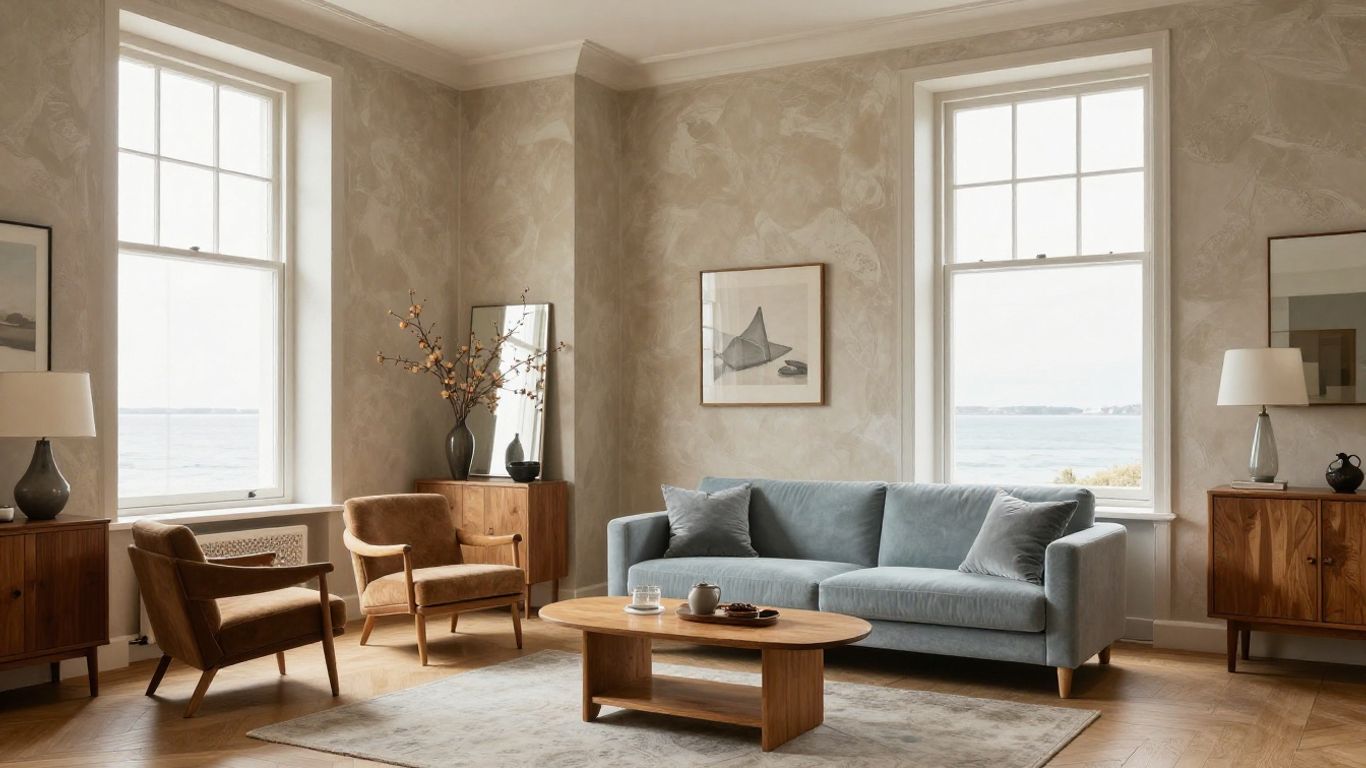
The apartment is meant to feel rooted in the city while remaining contemporary and comfortable. That connection becomes most convincing when it is subtle enough to be discovered over time.
Responding to the architecture and rhythm of the old town
Historic streets often have an appealing irregularity: changing façades, varied openings, and transitions between narrow passages and wider views. Inside, we looked for a similar rhythm through shifts in texture, framed sightlines, and spaces that open gradually rather than all at once.
This approach avoids turning heritage into decoration. Instead, it allows the interior to acknowledge the character of its surroundings through scale and pacing. The apartment feels composed, but not overly uniform.
Connecting the interiors with Flensburg’s coastal identity
The coast can inform an interior without reducing it to nautical motifs. We drew from the quieter qualities of the setting: changing northern light, weathered surfaces, pale mineral tones, and the contrast between water, timber, and masonry. These references create a calm palette with enough depth to remain interesting throughout the day.
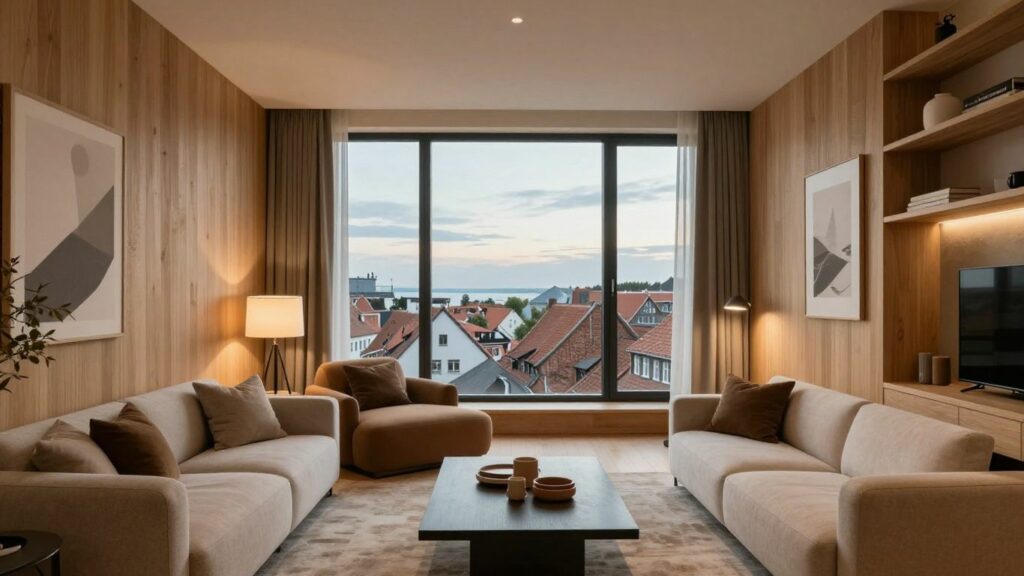
Windows, seating positions, and lighting are considered together so that the atmosphere changes naturally from morning to evening. The connection to the coast is therefore experiential rather than decorative. It is felt in the apartment’s temperature, softness, and openness.
Preserving a sense of place without relying on clichés
A strong sense of place does not require anchors, ropes, or obvious regional symbols. It can emerge from a careful reading of local proportions, craft traditions, colors, and daily patterns. That makes the interior more durable, because it belongs to Flensburg without becoming a themed setting.
The same restraint guided the selection of artwork and accessories. Each element has to contribute to the room’s balance or provide a useful point of focus. Nothing is included simply to explain where the apartment is.
Planning a layout that supports different types of stays
A successful apartment has to accommodate more than one kind of guest or itinerary. Some visitors arrive for a short city break, while others need room to unpack, cook, read, or work at a slower pace. The layout was developed to let these activities coexist without making the apartment feel divided.
The planning process focused on transitions as much as on individual rooms. A guest should be able to move from arrival to relaxation, from dining to conversation, and from social time to sleep without crossing through a maze of furniture.
Separating social spaces from areas designed for rest
Shared spaces benefit from openness and visual connection, while sleeping areas need a greater sense of retreat. We used furniture placement, changes in texture, and considered sightlines to establish that distinction without relying only on walls. The apartment can feel connected while still offering moments of privacy.
This is especially useful when two people follow different schedules. One person can settle into a quiet corner while another prepares a meal or enjoys the main living area. Good zoning makes that flexibility feel natural rather than improvised.
Making compact rooms feel open and functional
Compact spaces become more comfortable when every element has a clear purpose. Furniture is kept proportional to the room, circulation routes remain visible, and storage is placed where it is most likely to be used. A restrained number of objects also allows light and air to do more of the visual work.
Several small decisions can make a noticeable difference: keeping corners visually quiet, using reflective surfaces selectively, and avoiding furniture that blocks a window or passage. Openness is not created by removing everything; it comes from giving each remaining element enough room to function.
Accommodating couples, families, and longer visits
Flexibility was considered without making the apartment feel generic. Seating can support conversation or quiet time, dining areas can serve more than one purpose, and storage allows guests to move beyond living out of a suitcase. These choices help the space adapt to different rhythms of stay.
The goal is not to predict every use, but to leave enough freedom for guests to make the apartment their own for a while. That is one of the central differences between a carefully planned apartment and a room arranged only for overnight use.
Choosing materials and details for a boutique apartment design in Flensburg
Materials carry much of the emotional weight in an interior. They influence how a room sounds, how it feels underfoot, and how it changes with northern daylight. For this boutique apartment design Flensburg, the palette was developed to feel warm and composed rather than overly decorative.
The details are deliberately edited. A few strong textures and well-proportioned pieces create more coherence than a large collection of unrelated finishes.
Combining tactile finishes with a restrained color palette
The color scheme stays close to quiet neutrals, softened by natural variations in wood, stone, fabric, and painted surfaces. This creates a background that can absorb changing light without becoming flat. Tactile differences then provide the visual interest.
A matte finish beside a softly reflective surface, or a woven textile against a smoother plane, gives the rooms depth without demanding attention. The result is calm, but not sterile. It also allows personal belongings and seasonal changes to sit comfortably within the interior.
Selecting furniture that is both distinctive and practical
Furniture was chosen for the way it would be used over an entire stay, not only for its first impression. Seats need to support real relaxation, tables need enough flexibility for meals or work, and storage needs to be accessible without interrupting the room’s proportions.
Distinctive pieces are most effective when they are given space around them. Instead of filling every corner, we selected fewer objects with clear silhouettes and useful functions. This makes the apartment feel considered while preserving the informality guests expect from a residence.
Using lighting to shape the mood throughout the apartment
Lighting helps the apartment shift between different parts of the day. General illumination provides clarity on arrival, while warmer pools of light support reading, dining, and winding down in the evening. Fixtures are placed to illuminate surfaces and activities rather than simply brighten the room.
The effect is subtle but important. A carefully layered lighting plan can make a compact apartment feel more generous, especially when it avoids glare and gives guests control over the atmosphere. It also helps the materials reveal their character after daylight fades.
Building comfort into every guest experience
Comfort begins before a guest sits down. It includes the way arrival is understood, the confidence of moving through the apartment, and the small amenities that prevent unnecessary errands. We approached the experience as a sequence, considering what someone might need at each stage of a stay.
That sequence should feel coherent rather than over-designed. The best support is often the kind guests notice only because everything works as expected.
Designing intuitive arrival and check-in moments
Arrival can be tiring, particularly after a long journey or an unfamiliar route through a historic city. Instructions, access points, and the first view of the apartment should therefore be clear and calm. The environment should reassure guests without surrounding them with excessive information.
A considered entrance also establishes the tone for the rest of the stay. Practical items have a place, surfaces are easy to read, and the transition from outside to inside feels deliberate. These are simple gestures, but they have a strong effect on first impressions.
Integrating technology without compromising the sense of calm
Technology should support the stay rather than become its main feature. Controls need to be easy to find, connectivity should be straightforward, and devices should not dominate the visual field. When systems are quietly integrated, guests can use them without feeling that they are operating a complex environment.
The principle is simple: offer useful control while keeping the room visually restful. That means reducing visible clutter and avoiding a collection of interfaces that ask for attention at every turn.
Providing the amenities modern travelers actually use
Amenities were considered through the lens of real routines rather than an abstract list. Guests generally value things that help them sleep well, prepare something simple, stay connected, and keep personal belongings organized. Quality matters most where an item is handled repeatedly.
A useful way to test the selection is to ask whether it supports one of these everyday moments:
- Arriving with luggage and settling in
- Preparing coffee, breakfast, or a relaxed meal
- Resting, reading, or working comfortably
- Storing clothing and personal belongings
This keeps the apartment generous without making it crowded. The result is a more focused form of hospitality, where each provision earns its place.
Creating a stronger connection to the destination
An apartment should not isolate guests from the city around it. It can offer a comfortable base while still encouraging curiosity about local streets, food, architecture, and the waterfront. The design supports that relationship by making the surrounding destination visible in everyday rituals.
For Oben Estate, the sense of place is not a decorative layer added to a neutral interior. It is part of how the apartment is experienced, from the first glimpse outside to the decision to linger over breakfast before heading out.
Framing views and daily rituals around the city
Views become more meaningful when they are paired with a useful activity. A window can frame morning light over coffee, a chair can create a place to pause after walking, and a dining surface can turn an ordinary meal into a moment of observation. These arrangements encourage guests to notice the city at a slower pace.
The design does not need to direct attention constantly. It simply makes room for it. By positioning furniture thoughtfully and keeping sightlines open, the apartment lets the destination participate in the stay without overwhelming the interior.
Reflecting local craft, history, and maritime influences
Local identity can be expressed through quality and restraint. Honest materials, careful joinery, varied textures, and references to working waterfronts can create a connection that feels more authentic than literal decoration. Historical influence is strongest when it informs proportion and material choices.
This also leaves room for interpretation. Guests can bring their own associations to the apartment, while the setting still provides a quiet northern character. The interior becomes a companion to the city rather than a summary of it.
Helping guests experience Flensburg beyond the apartment
A well-designed stay should make it easy to leave the apartment and explore. That may mean keeping arrival and departure uncomplicated, allowing space for coats and bags, or providing a comfortable place to return to after a long walk. Hospitality extends beyond what happens indoors.
The apartment is most successful when it supports a healthy rhythm between discovery and retreat. Guests can spend the day in Flensburg, return for a quiet pause, and head out again without feeling that the accommodation has fixed the schedule for them.
Designing for lasting quality and responsible hospitality
Responsible hospitality is closely connected to good design. Choosing fewer, better-considered elements can reduce waste, simplify upkeep, and make the apartment more adaptable. It also protects the calm atmosphere that depends on visual and material coherence.
Durability was therefore considered alongside beauty from the beginning. An apartment that remains useful and appealing over time offers a better experience for guests and a more sensible foundation for its future.
Prioritizing durable materials and easy maintenance
High-use areas need finishes that can tolerate regular attention without losing their character. Surfaces should be practical to clean, fabrics should suit everyday use, and furniture should be selected with repair and replacement in mind. These decisions are rarely dramatic, but they shape the quality of hospitality over many stays.
Durability does not have to look heavy or institutional. With the right texture and proportion, resilient materials can still feel warm, refined, and appropriate to a historic setting. The aim is for wear to be managed rather than disguised.
Reducing excess through purposeful, flexible furnishings
Every additional object creates visual noise, maintenance, and another decision for guests. We favored furnishings that can serve more than one purpose while retaining a clear identity. A table can support dining, reading, or a laptop; a bench can assist with luggage and provide informal seating.
This kind of flexibility is more useful than simply adding more furniture. It keeps rooms open and gives guests freedom to arrange their time without making the apartment feel empty or under-equipped.
Creating an interior that can remain relevant over time
Trends can date quickly, particularly when they are applied across every surface. A quieter foundation allows the apartment to evolve through small updates rather than demanding a complete redesign. Natural variation, good proportions, and a disciplined palette offer that longevity.
The most lasting interiors are not frozen in one moment. They have enough character to be memorable and enough restraint to remain welcoming as expectations change. That balance was central to the design of Oben Estate.
Plan Your Stay
If you would like to experience the finished setting for yourself, join the waiting list for updates about Oben Estate’s opening and availability.
Conclusion
Oben Estate was designed as a thoughtful bridge between the comforts of home and the curiosity of travel. Its interiors respond to Flensburg through measured materials, flexible planning, and a calm attention to daily experience. The result is intended to feel distinctive when guests arrive, comfortable as they settle in, and connected to the city long after they leave.
Frequently Asked Questions
What defines a boutique apartment design in Flensburg?
It combines a personal visual identity with practical residential comfort, while allowing the historic architecture, coastal atmosphere, and everyday rhythm of Flensburg to inform the design.
How can an apartment feel connected to its location?
A strong connection can come through materials, proportions, views, lighting, and references to local craft or history. It does not require obvious themed decoration.
What makes a compact apartment feel spacious?
Clear circulation, appropriately scaled furniture, limited visual clutter, useful storage, and carefully managed sightlines can make a smaller interior feel more open and comfortable.
How should a vacation apartment support different kinds of guests?
Flexible seating, adaptable surfaces, practical storage, and a clear separation between social and restful areas allow couples, families, and longer-stay guests to use the space in different ways.
Why is lighting so important in apartment design?
Layered lighting helps a room support several activities and moods. It can provide clarity when needed while creating warmth for dining, reading, or relaxing later in the day.
What should responsible hospitality consider in the interior?
It should favor durable materials, purposeful furnishings, manageable maintenance, and an overall design that can remain useful and appealing without frequent replacement.
How can guests experience more of a city during a short stay?
The accommodation should make departure and return easy, provide a comfortable base for rest, and use views, local references, and practical planning to keep the destination present throughout the visit.