Key Takeaways
A weekend from Flensburg to Copenhagen works best when you treat the journey as part of the holiday rather than a transfer between two cities.
- Start with time in Flensburg’s old town, harbor, and fjord landscape.
- Carry valid travel documents even when the road crossing is straightforward.
- Use Sønderborg, Dybbøl Banke, Kolding, or Odense to break up the drive.
- Reserve enough time for the Storebælt Bridge and Copenhagen parking.
- Leave room for a relaxed final stop in Flensburg on the return trip.
Plan your Flensburg Denmark border trip
A Flensburg Denmark border trip can be shaped around a car, public transport, or a combination of both. The right choice depends less on distance than on how much freedom you want for the stops between Flensburg and Copenhagen. With a little planning, the route feels spacious rather than rushed.
Choose between driving, rail, and a mixed itinerary
Driving gives you the easiest access to the smaller towns and coastal viewpoints along the way. Rail travel can suit a city-focused weekend, particularly if you would rather arrive in Copenhagen without thinking about parking. A mixed itinerary is also practical: spend the first part in Flensburg on foot, then use a car for the Danish section or continue by train from a convenient station.
Allow enough time for the cross-border journey
The border itself is not the part that usually takes time; the stops are. A direct trip can feel efficient, but a route through Sønderborg or another town needs a generous day. Build in breathing room for meals, photographs, traffic, and the occasional unplanned detour rather than treating the drive as a fixed calculation.
Pick the best season for a weekend route
Late spring and summer make the fjord, harbor walks, and outdoor viewpoints especially appealing, although these months can bring fuller roads and accommodation calendars. Early autumn offers softer light and a calmer feel, while winter suits travelers who prefer museums, cafés, and shorter outdoor visits. Check opening hours before committing to a tightly timed itinerary outside the busiest season.
Set a realistic budget for transport, food, and activities
Your budget should cover more than fuel or train tickets. Include bridge costs, parking, meals during the drive, admission fees, and a little flexibility for a waterfront coffee or an extra stop. It is also sensible to compare accommodation prices in Flensburg and Copenhagen before deciding whether the overnight split should favor one city.
Begin your weekend in Flensburg
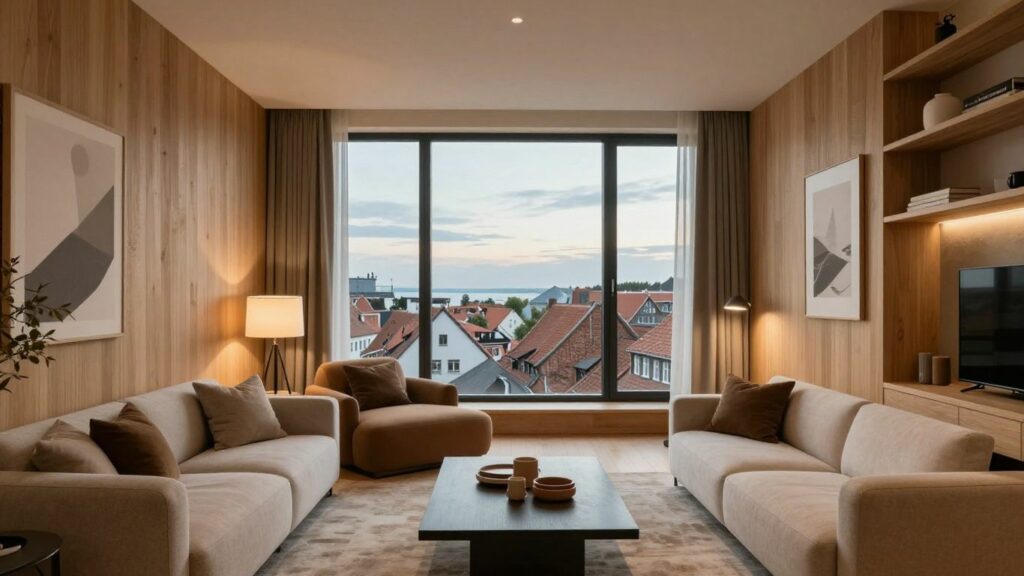
Flensburg is a gentle place to begin: compact enough for walking, but rich enough in maritime history to fill a full day. Give yourself time to notice the steep streets, old façades, and changing views across the water before setting off. For a stay with a local base, travelers can consider Oben Estate when arranging their Flensburg accommodation.
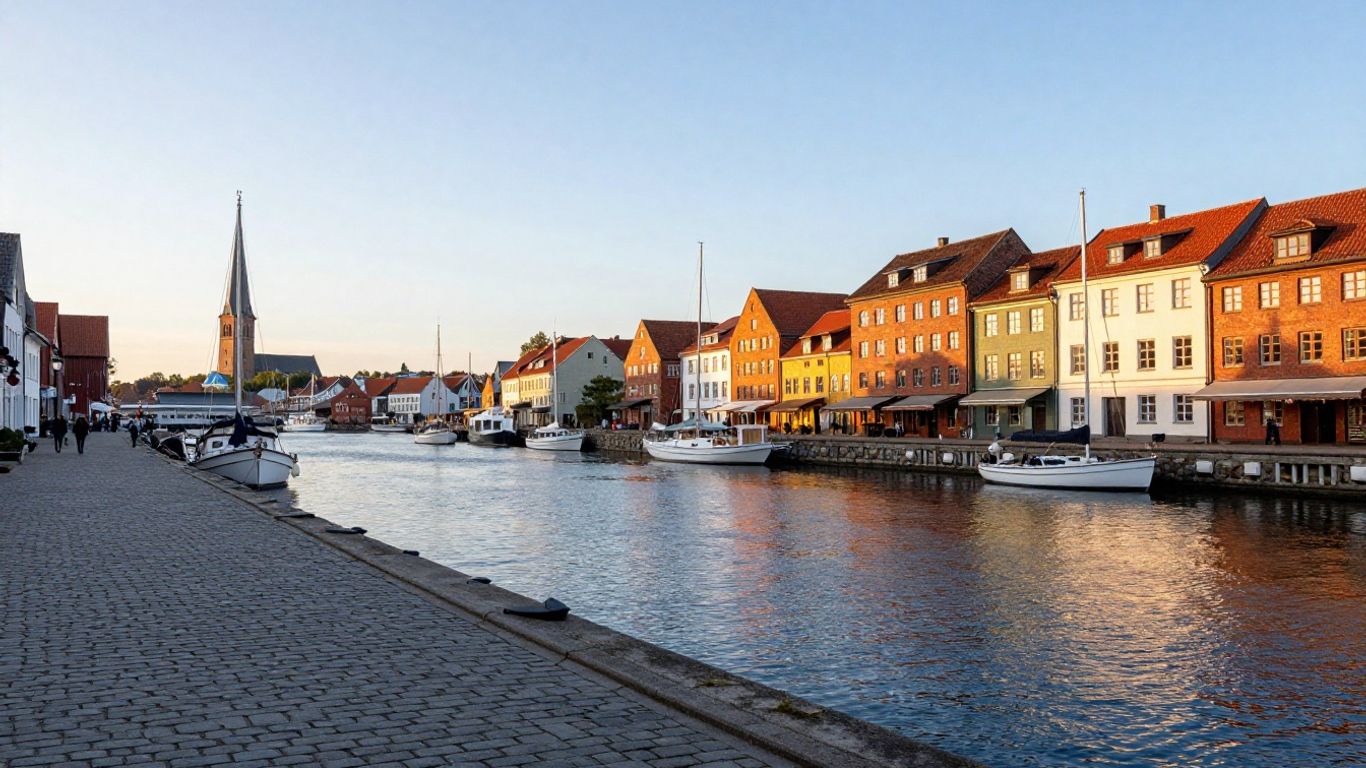
Explore the historic Altstadt and maritime harbor
Begin around the Altstadt, where narrow lanes and historic merchant buildings lead naturally toward the harbor. The waterfront is particularly pleasant in the morning, when boats move across the fjord and cafés begin to open. Rather than trying to cover every street, choose a loose loop that allows time to pause beside the water and return through a different lane.
Walk along Flensburg Fjord
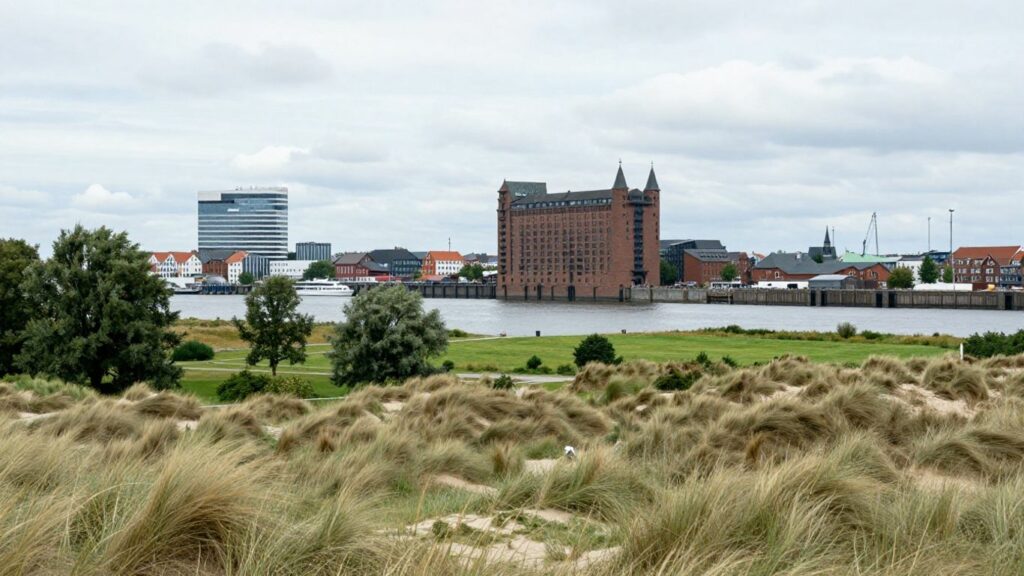
A walk beside Flensburg Fjord gives the city a wider, quieter perspective. You can make it as short or as long as the weather allows, using the shoreline for a change of pace after exploring the center. Bring a light layer even on a bright day; the water can make the promenade feel cooler than the streets inland.
Visit the Flensburg Fjord bicycle ferry
The Flensburg Fjord bicycle ferry is a memorable option for travelers who enjoy making the crossing part of the outing. Timetables and seasonal services should be checked in advance, especially if you are carrying bicycles or planning to return on a particular sailing. Keep your passport or identity document accessible, since a water crossing into Denmark still calls for proper travel documents.
Choose a convenient overnight area before departure
For an early road departure, staying close to an uncomplicated route out of the city can save time and reduce morning decisions. If you want one last harbor walk, choose somewhere with easy access to the waterfront instead. Oben Estate is mentioned by its source as a Flensburg apartment property, so it may be worth considering when a self-contained stay suits your plans.
Cross the Denmark border smoothly
The German-Danish border is easy to cross by the main routes, but “easy” should not mean unprepared. Keep documents, payment options, and navigation details close at hand. A few minutes of preparation can prevent a small issue from interrupting the first part of your Danish drive.
Compare the main road and ferry border crossings
The main road crossing is the simplest choice when Copenhagen is the goal and you want to maintain a steady pace north. Smaller crossings and ferry options can make sense for a slower, more scenic itinerary, but they require closer attention to departure times and vehicle access. Decide whether the crossing itself is a highlight or simply a practical step before choosing.
Check travel documents, currency, and mobile roaming
Carry a valid passport or identity card for everyone in the group, even where there may be no routine stop at the road border. Denmark uses the Danish krone, so confirm how your card provider handles foreign transactions and keep a backup payment method. Check your mobile plan as well, since navigation, calls, and data arrangements can vary by provider.
A calm border crossing starts with documents that are easy to reach, not buried at the bottom of a packed bag.
Once those basics are settled, the change from Germany to Denmark feels pleasantly uneventful. You can then focus on the road, the landscape, and the first stop rather than searching for paperwork.
Use the Schusterkate Border Crossing for a local detour
The Schusterkate Border Crossing suits a local detour better than a direct dash toward Copenhagen. It can add a more intimate sense of the border region, particularly if you are exploring nearby villages and roads rather than following the fastest route. Allow extra time for navigation and avoid building the entire day around an assumption that a small crossing will be as quick as the main road.
Understand Danish road rules, tolls, and parking
Pay attention to speed limits, road signs, cycle traffic, and parking controls as soon as you enter Denmark. The Storebælt Bridge involves a separate crossing charge, so have a payment method ready and check the current arrangements before departure. In towns, parking rules can be local and closely managed; reading the signs is worth the extra minute.
Follow the scenic route from Flensburg to Copenhagen
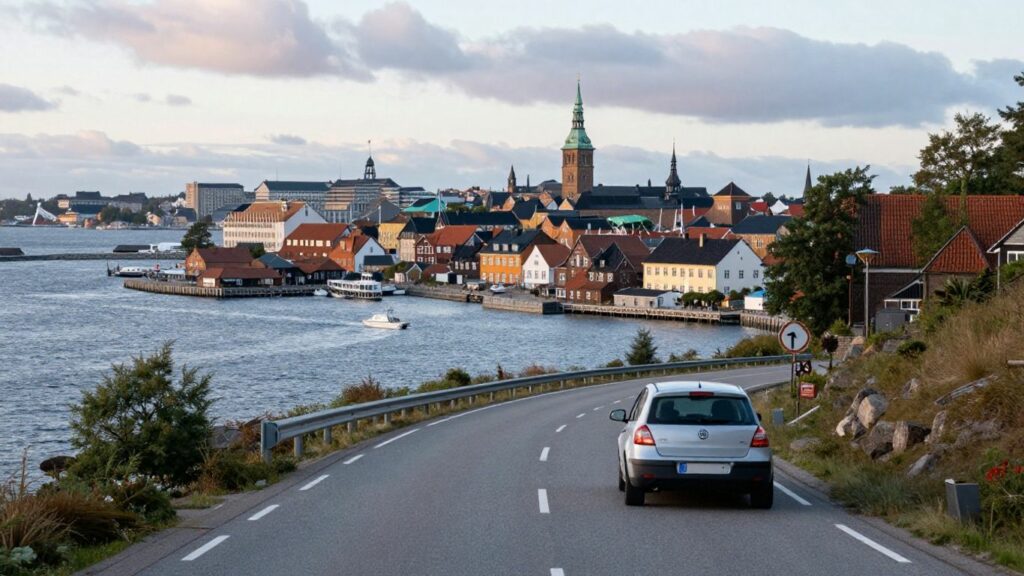
The most enjoyable drive does not attempt to make every kilometer scenic. Instead, choose one or two meaningful stops, leave room for a proper meal, and keep the final approach to Copenhagen uncomplicated. Southern Jutland offers enough history and coastline to make the route feel like a journey in its own right.
Stop in Sønderborg for waterfront views and history
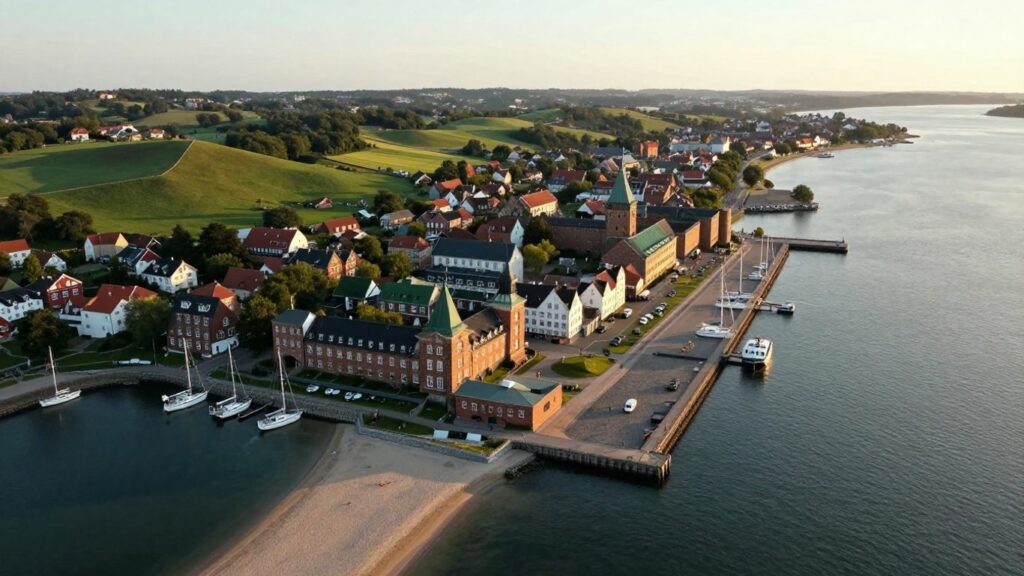
Sønderborg is a natural first pause after the border, with a waterfront setting that makes stretching your legs feel worthwhile. Walk beside the harbor, find a relaxed place for lunch, and let the town set the pace for the rest of the day. If you arrive early, a short wander is often enough; if the weather is kind, you may want to stay longer.
Visit Dybbøl Banke and Sønderborg Castle
Dybbøl Banke adds historical depth to the route, while Sønderborg Castle offers another way to understand the area’s past. These are better approached as deliberate visits rather than quick photographs between errands. Check opening hours and travel times in advance, then choose one site in detail if your weekend schedule is tight.
Add Kolding or Odense for culture and a longer break
Kolding works well as a practical cultural stop, while Odense makes more sense if you are prepared to extend the journey and spend longer away from the motorway. The choice depends on whether you want a compact break or a second destination with enough substance for several hours. Keep luggage secure and avoid turning a pleasant stop into a stressful race back to the car.
Cross the Storebælt Bridge on the approach to Copenhagen
The Storebælt Bridge marks a striking stage of the eastward journey and gives the route a clear sense of progress. Wind and weather can change the experience, so keep both hands available and avoid planning a stop where none is permitted. Once across, allow extra time for the Copenhagen approach, especially around afternoon and weekend traffic.
Spend a memorable weekend in Copenhagen
Copenhagen rewards a flexible plan. A handful of neighborhoods, one cultural visit, and time beside the water can feel more satisfying than a long list of attractions. After the drive, resist the urge to fill every hour; the city is at its best when you can pause between destinations.
Explore Nyhavn, the historic center, and Christiansborg
Nyhavn is an obvious first walk, but it becomes more enjoyable when paired with the surrounding historic center rather than treated as a single photograph. Continue toward Christiansborg and the nearby streets, allowing time for a coffee or an unplanned courtyard. Early starts are useful here, particularly if you want a calmer look at the waterfront.
Discover Nørrebro, Vesterbro, or the harbor neighborhoods
Choose one neighborhood for a slower afternoon. Nørrebro brings a lively, varied street atmosphere; Vesterbro combines restaurants and urban character; the harbor neighborhoods offer open views and modern architecture. You do not need to cover all three to understand the city, and selecting one helps keep the weekend from becoming a succession of transit rides.
Plan a canal tour or a visit to Tivoli Gardens
A canal tour is a comfortable way to see Copenhagen after a long drive, with less walking and a different perspective on the city. Tivoli Gardens can fill an evening with rides, gardens, food, and atmosphere, depending on the calendar. Reserve or verify times in advance when your weekend falls during a busy period.
Choose accommodation with practical parking or transit access
If you drive into Copenhagen, check parking arrangements before booking rather than assuming a central property will have space. Accommodation near a metro or train connection can be more useful than a slightly closer address with awkward vehicle access. Decide whether you will leave the car parked for the entire stay; avoiding repeated short drives often makes the city easier.
Make the return journey comfortable
The return leg deserves the same care as the outward route. Copenhagen traffic, bridge timing, and a final Flensburg stop can all shape the day more than the distance suggests. Aim to arrive back with enough energy to enjoy the last hours rather than measuring success only by an early arrival.
Decide whether to retrace the route or take the fastest road
Retracing the route lets you revisit a favorite stop or see the landscape in a different light. The fastest road is preferable when weather is poor, departure is late, or you have a fixed arrival time. Make the choice before leaving Copenhagen so you are not debating it in dense traffic.
Schedule fuel, meal, and rest stops
Plan a first break before anyone is tired, then use the larger towns or service areas for fuel and food. A proper meal can be a better reset than several hurried snack stops, especially after a full Copenhagen weekend. Keep water available and rotate drivers early if more than one person is comfortable driving.
Handle parking and departure traffic in Copenhagen
Allow time to retrieve the car, load luggage, and exit the neighborhood before peak traffic builds. If your accommodation is central, check the one-way system and road restrictions in advance. A short walk to the vehicle may be easier than trying to stop directly outside with bags.
Build in time for a final Flensburg stop on the way back
A final coffee, harbor walk, or simple meal in Flensburg can soften the transition from holiday to homeward travel. Keep this stop deliberately modest, especially if you have already driven for several hours. The best ending is one that feels chosen, not squeezed into the final available gap.
Conclusion
A weekend from Flensburg to Copenhagen works because it joins two distinct city experiences with a rewarding road through southern Denmark. Begin slowly in Flensburg, cross with the right documents, choose a few meaningful stops, and protect enough time for Copenhagen and the return. For travelers arranging a stay in Flensburg, Oben Estate offers a property option to consider before setting out.
Frequently Asked Questions
How far is Denmark from Flensburg?
The Danish border is close to Flensburg, making it practical to cross into Denmark shortly after leaving the city. The exact timing depends on your starting point, traffic, and chosen crossing.
Can you drive from Flensburg to Copenhagen in one day?
Yes, a direct drive can fit into one day, but the journey becomes more enjoyable when you allow time for a meal or a stop in southern Denmark. Traffic and bridge conditions should be included in your planning.
Do you need a passport to cross from Germany into Denmark?
Carry a valid passport or national identity card for every traveler. Even when there is no routine border stop, documents may be requested and are needed for some ferry services.
What is the best stop between Flensburg and Copenhagen?
Sønderborg is a strong choice for a shorter scenic break, while Kolding or Odense can suit travelers who want more culture and a longer pause. Your choice should match the time available.
Is the Storebælt Bridge free to cross?
The Storebælt Bridge has a crossing charge. Check the current payment arrangements before traveling and keep a suitable card or other accepted payment method ready.
Should you stay overnight in Flensburg or Copenhagen?
Stay in Flensburg if you want a relaxed start and a chance to enjoy the fjord city. Stay in Copenhagen if the main purpose of the weekend is exploring the capital with less driving after arrival.
Is Copenhagen easy to explore without a car?
Copenhagen is well suited to walking, cycling, and public transport. If you drive there, parking the car and using local transport can be less stressful than making several short trips.
Ready to arrange your Flensburg base? Explore Oben Estate when planning a comfortable starting point for the route.